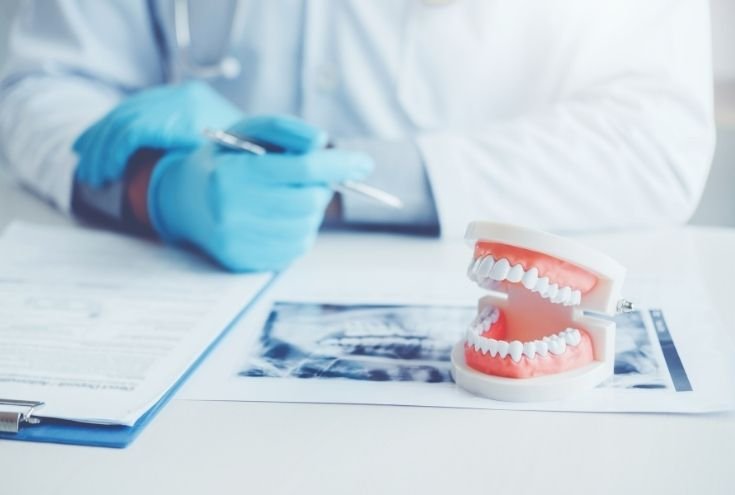
What Does a Dental Hygienist Do?
Dental hygienist removes plaque and hardened tartar that brushing cannot reach, assesses and monitors the health of your gums, and shows you how to clean more effectively at home.
This article covers the patient appointment rather than the career: what happens at the visit, what a scale and polish involves, how often to go, whether it hurts, and what it costs.
At our clinic, we treat the hygiene appointment as a measured health check rather than a cosmetic clean.

What a Dental Hygienist Does Within the Dental Team
A hygienist works on prevention, gum health, and professional cleaning, while the dentist diagnoses and treats decay, fractures, and restorations. Hygienists are registered with the General Dental Council in their own right, with their own defined scope of practice, and work alongside the dentist rather than under them.
The visible cleanliness is the part patients remember. In our experience, the appointment is worth more for what the hygienist finds and records: early gum inflammation, areas you consistently miss, and changes since your last visit. Our hygienists see patients at our Mayfair clinic, where we have practised preventive dentistry since 1863.
What Happens at a Dental Hygiene Appointment
A hygiene appointment consists of five stages: assessment, tartar removal, polishing, advice, and planning the next visit.
Assessment
We start by examining your gums and measuring the gap between the gum and the tooth. Readings of 1 to 3mm are considered healthy. Deeper readings indicate gum disease and tell us where inflammation has taken hold. Because we record these numbers, we can compare them appointment to appointment and show you whether a particular area is improving or getting worse. This is the part of the visit that changes clinical decisions.
Removing tartar
Plaque hardens into tartar, also called calculus, within days, and once it has set, it cannot be brushed away. We use an ultrasonic scaler, which combines high-frequency vibration with a water spray to break deposits off the tooth, both above and below the gumline. Hand instruments then finish the areas the scaler cannot reach comfortably, particularly between the teeth and around the necks of crowns.
Polishing
A rotating brush or rubber cup with a mildly abrasive paste lifts surface staining from tea, coffee, red wine, and tobacco, and leaves the tooth surface smoother. A smoother surface gives new plaque less to cling to, which is the clinical reason for polishing rather than simply the cosmetic one.
Advice
Generic brushing instructions rarely change anything. We tell you which specific surfaces are being missed, based on what we have just cleaned, and demonstrate how to reach them with the right brush size or technique for your mouth.
Planning
We agree on your next recall interval based on the gum readings taken that day, in line with NICE guidance on recall intervals, which recommends setting the gap on individual risk rather than a default.
| Quick tip: There is very little you need to do before a hygiene appointment. Brush and clean between your teeth as normal, and tell us about any new medication, pregnancy, or recent illness before we start, as each can affect how your gums respond. |
Scale and Polish, and When Deeper Cleaning is Needed
A scale and polish is the name for the two central stages above: scaling to remove hardened deposits, then polishing to lift staining and smooth the surface. It is the standard hygiene appointment, which most people mean by getting their teeth cleaned. For patients whose gums are healthy or only mildly inflamed, it is usually all that is required.
Where gum disease is more advanced, a different treatment applies. Root surface debridement cleans below the gumline along the root surface, usually over multiple appointments, and often with local anaesthetic. It sits outside a routine scale-and-polish and carries a different fee. If your readings show established disease, we can refer you internally for specialist periodontal care without sending you elsewhere.
How Often to See a Hygienist
Every six months suits most people, but the interval should reflect your gum health rather than the calendar. As a guide:
- Healthy gums and effective home cleaning: every 6 to 12 months
- Early gum inflammation or a history of gum disease: every 3 to 4 months
- Smokers, people with diabetes, and patients in orthodontic treatment: usually more often, as all three raise risk
Patients in braces or aligners deserve a specific mention. Plaque around brackets and bonded attachments is difficult to shift with a toothbrush alone, and prolonged buildup can leave visible white marks on the enamel once the appliance comes off. Regular hygiene visits during treatment are the practical answer.
| Signs it is time to book: Bleeding when you brush, persistent bad breath, visible build-up along the gumline, or gums that look swollen or have started to pull back from the teeth. |
Why Gum Health Matters Beyond Your Mouth
Gingivitis, meaning inflamed and bleeding gums, is fully reversible at that stage with professional cleaning and improved home care. Left untreated, it can progress to periodontitis, where the bone supporting the tooth is lost. That bone loss is not reversible, and periodontitis is the leading cause of adult tooth loss in the UK.
Research has also linked gum disease with cardiovascular disease, diabetes, and complications in pregnancy. The relationship is actively researched but not fully understood, and we would not claim gum disease causes any of those conditions. What it does establish is that inflammation in the mouth is not isolated from the rest of the body.
Whether a Hygiene Appointment Hurts
Most people find a routine scale-and-polish comfortable. The sensation is usually vibration and cold water rather than pain. When gums are already inflamed, they are more likely to feel tender and may bleed during cleaning, reflecting the inflammation rather than rough treatment. Sensitivity for a day or two afterwards, particularly along the gumline, is common and usually settles.
If you are anxious or you know certain teeth are sensitive, tell us before we start rather than partway through. We can adjust the pace, work in shorter stages, and discuss options for numbing a specific area.
Dental Hygienist Appointment Costs
Hygiene appointments at our Mayfair clinic start from £146. Where more extensive gum treatment is needed, a specialist periodontal consultation is £325, and non-surgical periodontal therapy starts from £1,250. Our full price list sets out the current fees.
Hygiene prices vary widely across the UK, and appointment length is a major reason why. A 20-minute appointment and a 45-minute one are not comparable, even where both are described as a scale and polish.
What You Can Do Between Appointments
What happens between visits matters as much as the appointment itself. Five things make the biggest difference:
- Brush twice daily for two minutes with a fluoride toothpaste, and spit rather than rinse afterwards so the fluoride stays on the teeth
- Clean between the teeth every day; around 40 per cent of each tooth surface sits between the teeth, out of reach of a toothbrush
- Use interdental brushing rather than floss wherever the gaps allow, as brushes remove more plaque from those surfaces
- Reduce how often you eat sugar rather than only how much, since frequency of exposure drives more damage than quantity in one sitting
- Do not ignore bleeding gums; it is the earliest warning sign and the one most often dismissed
This home-care detail is central to how we practise preventive dentistry, and it is why our hygiene appointments include time for demonstration rather than instruction alone.
Book a Hygiene Appointment in Mayfair
Knowing what a dental hygienist does is one thing; having your gums measured and recorded is what changes the outcome. All of our dental hygienists are GDC-registered and see patients at 73 New Bond Street, Mayfair, London W1S 1RS. If it has been years rather than months since your last visit, that is common and not something we will comment on; we will simply take the readings and start from where you are.
Book an appointment online or call 020 7499 9806, no matter how long it has been since your last visit.