Inlays, Onlays, and Crowns: Difference Explained
An inlay sits within the cusps of the tooth, an onlay extends over 1 or more cusps, and a crown covers the whole tooth down to the gum line. That single difference in coverage is what separates the three restorations and determines how much healthy enamel and dentine must be prepared away.
If you have just been told a tooth needs more than a filling, the onlay vs. crown question is worth asking before you agree to the plan, because inlays and onlays preserve tooth structure that a crown removes permanently.
Dental Inlay Explained
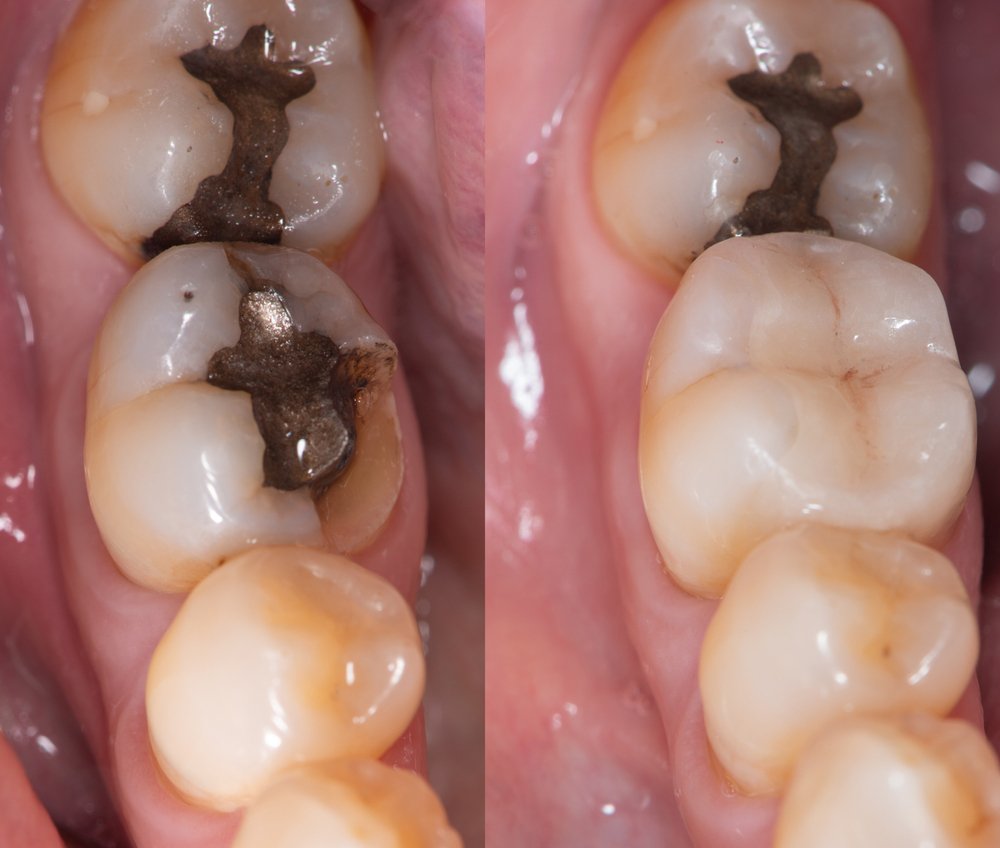
A dental inlay is a custom-made restoration that sits within the cusps of the tooth, on the biting surface, and is bonded into a prepared cavity. It is made in a dental laboratory from porcelain, ceramic, or composite rather than being built up directly in the mouth.
We use an inlay when decay or a failing old filling has left a cavity too large for a direct filling, but the surrounding cusps are still sound. The sequence runs across 2 visits: we prepare the cavity and take an impression or digital scan, fit a temporary restoration while the laboratory makes the inlay, then bond the finished restoration into place and check the bite.
Dental Onlay Explained
A dental onlay is the same restoration extended over 1 or more cusps, which is why it is sometimes described as a partial crown. Instead of filling only the space between the cusps, it caps the damaged ones and takes the biting load off them.
We recommend an onlay where a cusp is cracked, heavily worn, or undermined by an old filling, but there is still enough sound tooth that full coverage is unnecessary. The onlay is bonded to the remaining tooth rather than cemented over a reduced core, so the natural structure that is left is reinforced rather than replaced. The laboratory process and the 2-visit sequence are identical to an inlay.
Inlay vs Onlay: Which One You Need
The choice between an inlay and an onlay is dictated by how much of the tooth is damaged, not by preference. It is a clinical judgement about cusp integrity.
These are the factors we assess:
- Whether the cusps are intact or cracked, worn, or undermined
- The width of the cavity relative to the whole biting surface
- Whether any crack lines run into the cusp or the floor of the cavity
- How heavily the tooth has already been filled over its history
- Whether the tooth has been root treated, which changes how it handles load
In practice, the final decision is often made during the appointment, once the old filling and decay have been cleared away. Only then is the true extent of the damage visible. If the plan changes between the quote and the chair, your clinician should explain exactly what was found and why the design changed.
Onlay vs Crown: How the Two Compare
An onlay covers and bonds to the damaged portion of the tooth. A crown covers the entire tooth, so the tooth must be reduced on all surfaces to make room for it. That is the central distinction in the onlay vs crown comparison: the crown requires more healthy tooth to be removed.
Comparison point | Onlay | Crown |
Healthy tooth removed | Limited to the damaged cusps and cavity, with sound walls left intact | Reduction on all surfaces of the tooth, down towards the gum line |
Strength and coverage | Covers and protects selected cusps; relies on bonding to the remaining tooth | Full circumferential coverage, holding the whole tooth together |
Typical longevity | Long-term but not permanent. Bonded to the remaining tooth, so the bite and any grinding matter more than the material. | Long-term but not permanent. Full coverage resists splitting, and failure most often begins at the gum margin. |
Cost at our clinic | Price on request, call 020 7499 9806 | £1,240 to £1,950 per tooth |
An onlay preserves more tooth structure, but that does not make it the right answer in every case. Suitability is judged tooth by tooth. We would usually recommend one of our crowns when very little sound tooth wall remains, when a tooth has fractured and needs full circumferential support, or when a tooth has had root canal treatment and the remaining structure needs cuspal coverage to resist splitting. A root-treated back tooth that has lost both marginal ridges is the clearest case where a crown earns its extra preparation.
Quick tip: An onlay can usually be stepped up to a crown later if the tooth deteriorates. A tooth prepared for a crown cannot be put back. Where both options are genuinely viable, the more conservative one keeps the second option open. |
Inlay vs Filling: When a Filling Is Not Enough
A filling is placed directly into the tooth in a single visit. An inlay is made in a laboratory and bonded in, which gives closer control over shape, contact points with neighbouring teeth, and the contour of the biting surface.
Very large direct composite fillings carry load across a wide span with nothing but bonding to hold the remaining walls in place, which makes them more prone to failure over time and can wedge the cusps apart under chewing forces. A laboratory-made inlay or onlay is designed to distribute that load across the tooth instead. For small to moderate cavities with sound surrounding walls, a direct composite filling remains the appropriate and more conservative choice, and we will say so.
Materials: Porcelain, Ceramic, Composite, and Gold
Material choice balances 3 things: appearance, strength, and how the restoration wears against the opposing tooth.
- Porcelain and ceramic, including pressed ceramics, give tooth-coloured results and are the usual choice where the restoration is visible when you smile or speak.
- Laboratory composite sits at a lower cost, is kinder to the opposing tooth, and is less wear-resistant than ceramic.
- Gold remains a long-standing option for back teeth, where appearance matters less and where limited space favours a thinner, highly durable restoration.
We select the material with you based on the tooth’s position, your bite, and the amount of space available once the preparation is complete.
How Long Do Inlays, Onlays, and Crowns Last
All 3 are long-term restorations rather than permanent ones, and any figures quoted in research are typical ranges, not guarantees. Patient guidance from the Oral Health Foundation frames the lifespan of restorations in the same way.
What ends a restoration early is rarely the material. It is the bite. Grinding and clenching, an uneven contact that has never been adjusted, and plaque accumulating at the margin are the common causes of failure. If you grind, we may recommend a night guard as part of the restorative plan rather than as an afterthought. Routine hygiene appointments let us check the margins and the opposing bite before small problems become fractures.
What Inlays, Onlays, and Crowns Cost in London
Cost tracks the laboratory work and the amount of preparation involved, so a direct filling sits below a laboratory-made restoration in any onlay vs crown or inlay vs filling comparison.
At our Mayfair clinic, crowns are £1,240 to £1,950 per tooth, and composite fillings are £140 to £500. Inlays and onlays are quoted on consultation, because the fee depends on the size of the restoration and the material used. Call us on 020 7499 9806 and we will give you an indication for your tooth. Our published fees are on our prices page, and you receive a written treatment plan, including the fee for your specific tooth, before any work begins.
Inlays and Onlays at Our Mayfair Clinic
Have the tooth assessed before you agree to a crown. Which restoration a tooth actually needs is determined by the remaining tooth structure and your bite, not by a price list. At an examination, we assess what is left of the tooth, how it meets its opposing partner, and the trade-offs of each option, with the aim of keeping as much natural tooth as the case allows. You will find us on the first floor at 73 New Bond Street, Mayfair, London W1S 1RS. Call us today or book a consultation to talk through the onlay vs crown decision with our team.